
Every year, Americans set off fireworks, fire up the grill, and call July 4th the day the country was born. It feels obvious. It is printed on calendars, taught in schools, and celebrated with a federal holiday every summer.
But the real history is a little messier than that. If you dig into what actually happened in the summer of 1776, July 4th is not really the day America became independent. It is the day one document got its final wording approved, and the story of how that date beat out its more accurate rival is stranger than most people realize.
Here is the real story behind the date, straight from the letters and records of the people who lived it, and why one of the Founding Fathers spent the rest of his life insisting the country was celebrating the wrong day.
The Actual Vote Happened On July 2nd

On July 2, 1776, the Continental Congress voted to declare independence from Britain. Delegate Richard Henry Lee of Virginia had introduced the resolution weeks earlier, on June 7, calling for the colonies to become "free and independent states." After days of debate, the vote finally passed on July 2, with twelve colonies in favor and New York abstaining until it received permission from its legislature back home.
This was the real turning point, the moment delegates from the colonies formally agreed to break away from British rule. According to the US House of Representatives' History, Art & Archives, lawmakers from South Carolina, Pennsylvania, and Delaware switched their votes to yes that day, finally securing the unanimous support needed.
John Adams was so sure this was the historic moment that he wrote to his wife Abigail the very next day, calling July 2 "the most memorable Epocha in the History of America." He predicted it would be celebrated for generations with, in his words, "Pomp and Parade, with Shews, Games, Sports, Guns, Bells, Bonfires, and Illuminations, from one End of this Continent to the other." You can read the full letter in the National Archives' Founders Online collection.
Adams was right about the celebration. He just got the date wrong.
July 4th Was Really A Paperwork Date

So what actually happened on July 4th? Congress approved the final wording of the Declaration of Independence, the document explaining why the colonies were breaking away, drafted mainly by Thomas Jefferson with edits from Adams and Benjamin Franklin.
The vote for independence happened on July 2nd. The explanation of that vote, the actual document laying out the reasons why, was finalized two days later, on July 4th. Congress then ordered the approved text printed and distributed to the new states and the army.
Somehow, the second event became the one we remember. Most historians point to one simple reason: the words "In Congress, July 4, 1776" sit right at the top of the Declaration, and that was the date printed on the very first copies distributed to the public. A dramatic, quotable document that people could read aloud and pass around had more staying power in public memory than a vote recorded quietly in congressional minutes.
Most Signatures Came Even Later
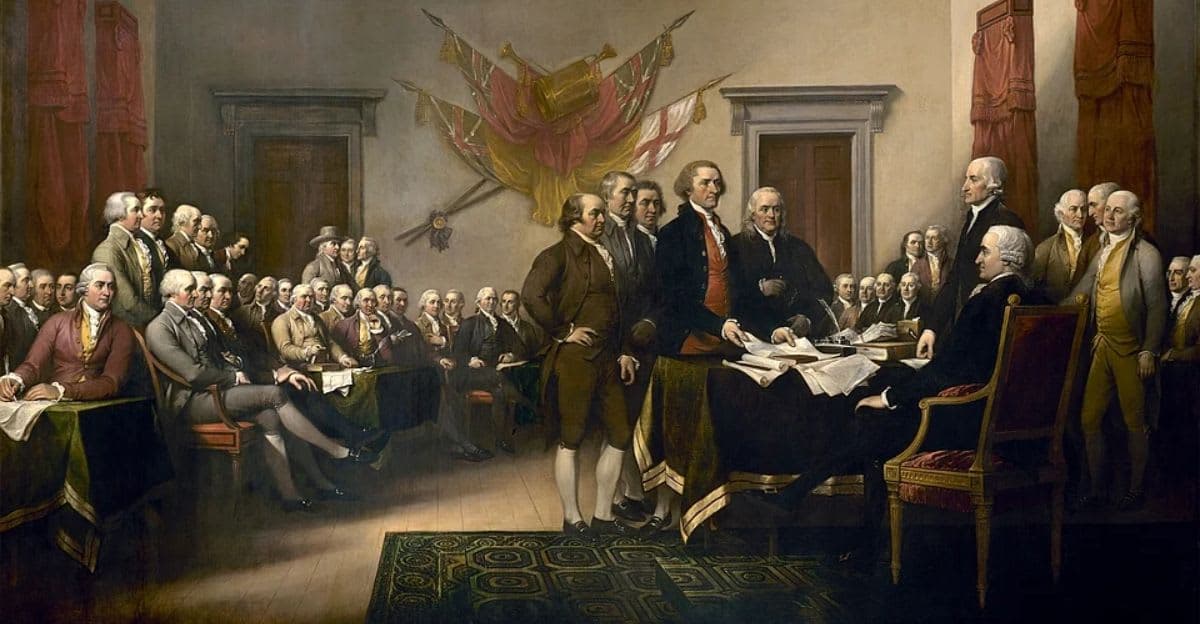
Here is another twist. Most people picture all the Founding Fathers lining up to sign the Declaration on July 4th, quills in hand, in one dramatic ceremony. In reality, that scene never happened the way it is usually pictured.
Congress ordered the Declaration engrossed onto formal parchment on July 19, and most delegates did not actually sign that copy until August 2, 1776, nearly a month after the text was approved. A handful of signatures were added even later than that, as delegates who had been away returned to Congress. The famous image of everyone gathered together signing on one historic afternoon is more legend than fact.
Independence Wasn't Official Until Years Later

Even after the Declaration, the war for independence was far from over. The Revolutionary War had actually begun over a year earlier, in April 1775, at the Battles of Lexington and Concord. The Declaration did not end the fighting, it defined what the colonies were fighting for.
Britain did not formally recognize the United States as an independent nation until the Treaty of Paris was signed in 1783, seven years after the Declaration was approved. So depending on how you define "independence," you could make a case for July 2nd, July 4th, or 1783 as the real starting point of the country.
Celebrations Started Before The Government Made It Official

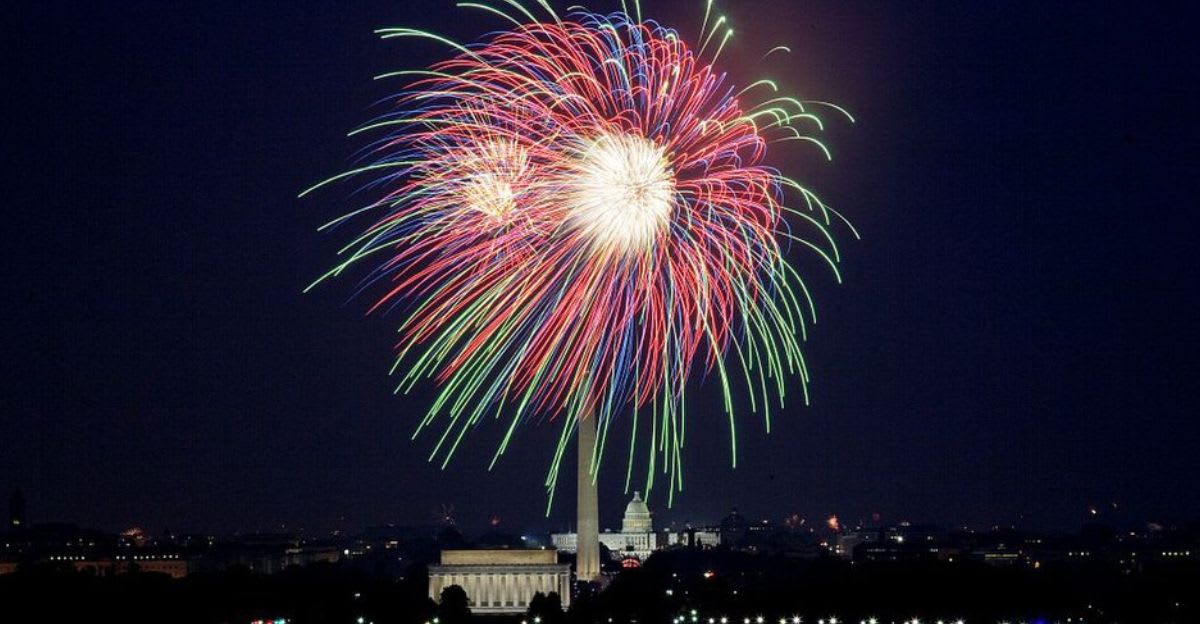
Long before any law made July 4th official, ordinary Americans had already claimed the date for themselves. Philadelphia held the first major Independence Day celebration on July 4, 1777, a full year after the Declaration, complete with a parade, a thirteen-gun cannon salute, bonfires, and fireworks lighting up the sky over the city.
The tradition kept growing from there. In 1778, George Washington marked the day by issuing his soldiers double rations of rum. In 1781, Massachusetts became the first state to make July 4th an official state holiday, decades before the federal government followed suit. Bristol, Rhode Island has held a Fourth of July celebration every single year since 1785, making it the oldest continuous Independence Day celebration in the country.
The Holiday Itself Took Almost A Century To Become Official
Despite all that grassroots enthusiasm, July 4th was not made a federal holiday until 1870, nearly 100 years after the events it celebrates. Even then, the new law only applied to federal employees in Washington, D.C. It took until 1938, more than 160 years after the Declaration, for Congress to make it a paid holiday for federal workers nationwide.
For most of American history, in other words, celebrating July 4th was a local, informal, deeply personal tradition rather than something handed down by Washington.
A Strange Coincidence That Makes July 4th Feel Fated
Even though the date is technically a bit of an accident of paperwork and printing, history added an eerie twist that makes July 4th feel meant to be. Thomas Jefferson and John Adams, the two men most responsible for the Declaration of Independence and both former presidents, died on the exact same day: July 4, 1826, fifty years to the day after independence was declared.
Adams, in his final hours, is said to have murmured that Jefferson still survived, not knowing his old friend and political rival had actually died just hours earlier that same afternoon in Virginia. As if that were not enough, a third founding president, James Monroe, also died on July 4th, five years later in 1831, making him the third of the first five American presidents to pass away on the nation's independence day. History.com's coverage of the holiday notes that these deaths, arriving on such a symbolically loaded date, helped cement July 4th even more firmly in the public imagination as a day of national destiny.
Conclusion
July 4th earned its place in the American calendar less through legal precision and more through the sheer staying power of a well-timed piece of paper. The real vote for independence happened on July 2nd, the famous signing ceremony people picture never really happened as one single event, and true, internationally recognized independence did not arrive until 1783.
None of that makes the holiday any less worth celebrating. If anything, it makes it more interesting. A date born out of printing schedules and public memory somehow grew into one of the most unifying celebrations in American life, complete with fireworks, backyard cookouts, and a coincidence involving two former presidents dying fifty years to the day after they helped start it all.
So this year, when the fireworks light up the sky, you will know the real story behind the date, and why John Adams spent the rest of his life quietly convinced everyone was celebrating on the wrong day.
You may also like: